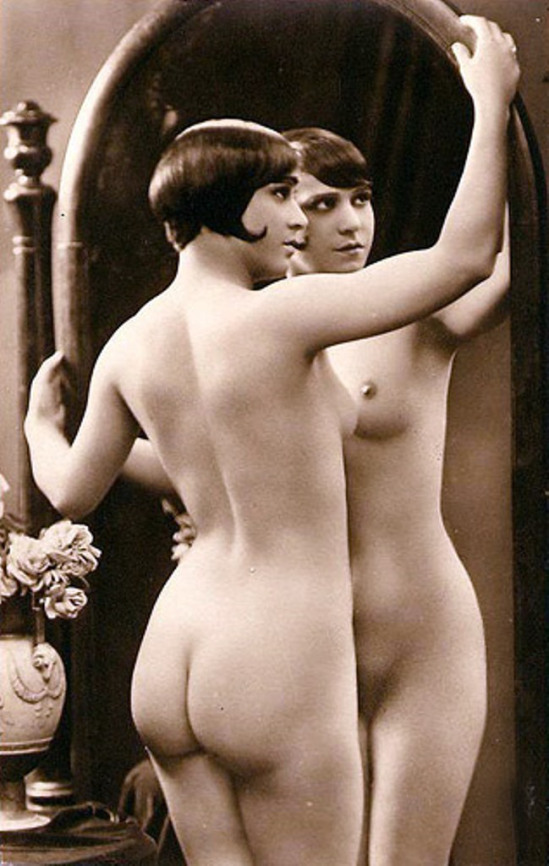
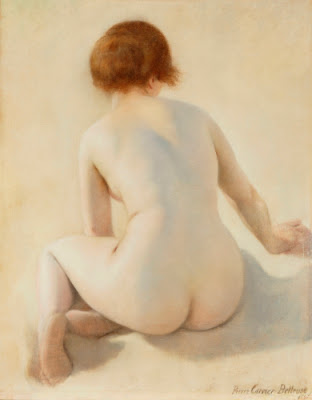
A kind of spin-off of my Strange Tears community at Livejournal, but dealing with 20th century art as well as that of the 19th century. Even some photography. You won't find any abstract art here though. There will be nudes though, so if you have a problem with that you've been warned.
Wednesday, August 31, 2022
Félix-Jacques Antoine Moulin (1802-1875)
Félix-Jacques Antoine Moulin (1802-1875), French photographer.
Félix-Jacques Antoine Moulin, Nude woman in colored daguerreotype, circa 1851–1854
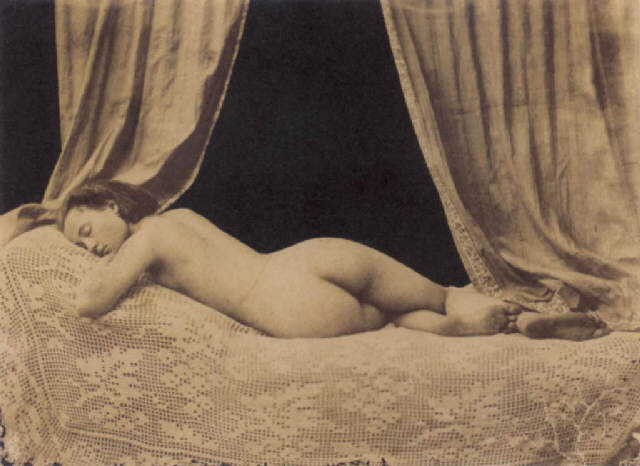
Félix-Jacques Antoine Moulin, Recumbent female nude, Amélie, 1852–1853
Monday, August 8, 2022
Charles William Mitchell (1854–1903)
Charles William Mitchell (1854–1903), English Pre-Raphaelite painter.
Charles William Mitchell, The Spirit of Song
Saturday, July 16, 2022
Thursday, July 7, 2022
Julien Mandel (1893–1961)
Julien Mandel (1893-1961), photographer.
Julien Mandel, Alice Prin AKA Kiki de Montparnasse
Julien Mandel, Akt mit Schuhen
Wednesday, April 6, 2022
Giulio Aristide Sartorio (1860-1932)
Giulio Aristide Sartorio (1860-1932), Italian painter.
Giulio Aristide Sartorio, La Gorgone e gli eroi, 1897
Saturday, February 19, 2022
Alexandre Jacques Chantron (1842-1918)
Alexandre Jacques Chantron (1842-1918), French artist and photographer.
Alexandre Jacques Chantron, Danae, 1891
Alexandre Jacques Chantron, Diana at her bath
Alexandre Jacques Chantron, Femme au bilboquet
Alexandre Jacques Chantron, La Coquette
Alexandre Jacques Chantron, Les Nymphes s’amusent
Alexandre Jacques Chantron, Plaisirs de l’ete, 1907
Friday, October 1, 2021
Marcel Châtelain (active 1898-1930)
Marcel Châtelain (known as Eugène, active 1898-1930)
Marcel Châtelain, Femmes nues, dans un riad
Marcel Châtelain, Jeune femme à la cigarette, vers 1904
Marcel Châtelain, Nu au jasmin, vers 1904
Thursday, September 16, 2021
Alexander Koester (1864-1932)
Friday, September 10, 2021
Friday, September 3, 2021
Whores in History
Whores in History by Nickie Roberts is an attempt at an in-depth history of prostitution in the West. The author admits that she is not unbiased (as a former stripper she considers herself to be a sex worker) but she’s actually rather less biased than most authors who have tackled this subject. She makes it clear up-front that she favours the complete legalisation of prostitution. Interestingly enough she’s as critical of feminists as she is of moral crusaders.
Her accounts of the various different forms of prostitution that existed in classic Greece and ancient Rome are fascinating. I knew that of course there would have been expensive courtesans and cheap streetwalkers but I had no idea that there were so many distinctively different varieties of prostitute in the ancient world, each with a different social status. Prostitution was simply taken for granted in the ancient pagan world. The rise of Christianity changed all that.
In spite of Christian hostility to sex the Dark Ages and the Middle Ages were in practice surprisingly easy-going in sexual matters. The mediävel Church may have ben corrupt but it was tolerant and often humane. The Reformation and the Counter-Reformation put an end to tolerance. But efforts to persecute prostitutes were notably unsuccessful and the profession continued to thrive until the moral reformers of the late 19th century appeared on the scene. The moral reformers were horrified by the things they saw in working class areas. Working class people were, despite their ghastly lives, managing to enjoy themselves - they were drinking, dancing, singing, making jokes and carousing with prostitutes. They had to be stopped.
The moral reformers were nice respectable middle-class people. They were distressed by the plight of the poor but they were not prepared to consider that maybe that plight was the result of an unjust economic system that ruthlessly and mercilessly exploited the working class, especially working class women (wages for working class women in “respectable” occupations were either starvation level or below starvation level and the work was unbelievably gruelling). It was after all that unjust economic system that made those nice respectable middle-class people so prosperous. Another explanation had to be found, and it was. They decided that the plight of the working class was a result of the immorality and viciousness of working-class people. It was all their own fault. So nice respectable middle-class people didn’t need to feel guilty after all. And surely the most wicked of all those wicked working class people were the prostitutes. The fact that the prostitutes made enough money to afford decent housing and decent food just proved how wicked and sinful they were.
The 19th century was the great age of prostitute rescue. Pious moral reformers put the whores into homes where they could be taught respectable middle class values. These homes were in practice prisons. The girls were taught respectable trades to fit them for a life of never-ending toil and drudgery for starvation wages but at least they wouldn’t be upsetting nice respectable middle-class people any more.
One of the key points that Roberts makes is that efforts to suppress prostitution were invariably aimed at working class prostitutes who catered for working class and lower middle class customers. The moral reformers were careful not to interfere with the pleasures of the rich and powerful.
She also points out that for working class girls prostitution was often by far the best career option available. Prostitutes on the whole enjoyed a much higher standard of living and were healthier, better housed, better fed and better clothed than respectable working class women. Their working conditions were immeasurably better. Many had the temerity to enjoy their lives. It was the relative prosperity and well-being of working class prostitutes that seemed to enrage the moral reformers more than anything else, added to the fact that so many prostitutes stubbornly refused to die young but instead eventually married or started small businesses with their earnings.
The book gets really interesting when it gets to the early 20th century. In the US this was the great age of Progressivism. The progressives succeeded in getting draconian anti-prostitution laws passed, the result of which was to put prostitution in the hands of organised crime. In most European countries similar approaches were taken, all of which made life miserable for whores but made nice respectable middle-class people feel really good about themselves. Then the feminists got in on the act. Feminists didn’t want men telling women how to live their lives. Henceforth feminists would tell women how to live their lives, and women would have to listen to the feminists, or face the consequences.
Even if you’re uncomfortable with her idea that prostitution should be completely legal and unregulated it has to be admitted that Roberts makes a very strong case. It’s hard to argue with her assessment that trying to regulate prostitution just leads to police corruption and abuses of power. Roberts also doesn’t take a simplistic political view. She points out that socialist regimes have been just as sexually repressive as capitalist ones, and she clearly (and rightly) dislikes the strand of feminism that seeks to control women’s sexuality. She also (correctly) points out the links between censorship (all too often driven by hostility to women’s sexuality and fear of women’s bodies) and attempts to control women’s sexual behaviour.
It’s a book that makes a complex but compelling argument. If you only ever read one book on the subject of prostitution this is the one to read. You may not agree with her but she’ll get you thinking. And in the current age of neo-puritanism the book is more relevant than ever.
Her accounts of the various different forms of prostitution that existed in classic Greece and ancient Rome are fascinating. I knew that of course there would have been expensive courtesans and cheap streetwalkers but I had no idea that there were so many distinctively different varieties of prostitute in the ancient world, each with a different social status. Prostitution was simply taken for granted in the ancient pagan world. The rise of Christianity changed all that.
In spite of Christian hostility to sex the Dark Ages and the Middle Ages were in practice surprisingly easy-going in sexual matters. The mediävel Church may have ben corrupt but it was tolerant and often humane. The Reformation and the Counter-Reformation put an end to tolerance. But efforts to persecute prostitutes were notably unsuccessful and the profession continued to thrive until the moral reformers of the late 19th century appeared on the scene. The moral reformers were horrified by the things they saw in working class areas. Working class people were, despite their ghastly lives, managing to enjoy themselves - they were drinking, dancing, singing, making jokes and carousing with prostitutes. They had to be stopped.
The moral reformers were nice respectable middle-class people. They were distressed by the plight of the poor but they were not prepared to consider that maybe that plight was the result of an unjust economic system that ruthlessly and mercilessly exploited the working class, especially working class women (wages for working class women in “respectable” occupations were either starvation level or below starvation level and the work was unbelievably gruelling). It was after all that unjust economic system that made those nice respectable middle-class people so prosperous. Another explanation had to be found, and it was. They decided that the plight of the working class was a result of the immorality and viciousness of working-class people. It was all their own fault. So nice respectable middle-class people didn’t need to feel guilty after all. And surely the most wicked of all those wicked working class people were the prostitutes. The fact that the prostitutes made enough money to afford decent housing and decent food just proved how wicked and sinful they were.
The 19th century was the great age of prostitute rescue. Pious moral reformers put the whores into homes where they could be taught respectable middle class values. These homes were in practice prisons. The girls were taught respectable trades to fit them for a life of never-ending toil and drudgery for starvation wages but at least they wouldn’t be upsetting nice respectable middle-class people any more.
One of the key points that Roberts makes is that efforts to suppress prostitution were invariably aimed at working class prostitutes who catered for working class and lower middle class customers. The moral reformers were careful not to interfere with the pleasures of the rich and powerful.
She also points out that for working class girls prostitution was often by far the best career option available. Prostitutes on the whole enjoyed a much higher standard of living and were healthier, better housed, better fed and better clothed than respectable working class women. Their working conditions were immeasurably better. Many had the temerity to enjoy their lives. It was the relative prosperity and well-being of working class prostitutes that seemed to enrage the moral reformers more than anything else, added to the fact that so many prostitutes stubbornly refused to die young but instead eventually married or started small businesses with their earnings.
The book gets really interesting when it gets to the early 20th century. In the US this was the great age of Progressivism. The progressives succeeded in getting draconian anti-prostitution laws passed, the result of which was to put prostitution in the hands of organised crime. In most European countries similar approaches were taken, all of which made life miserable for whores but made nice respectable middle-class people feel really good about themselves. Then the feminists got in on the act. Feminists didn’t want men telling women how to live their lives. Henceforth feminists would tell women how to live their lives, and women would have to listen to the feminists, or face the consequences.
Even if you’re uncomfortable with her idea that prostitution should be completely legal and unregulated it has to be admitted that Roberts makes a very strong case. It’s hard to argue with her assessment that trying to regulate prostitution just leads to police corruption and abuses of power. Roberts also doesn’t take a simplistic political view. She points out that socialist regimes have been just as sexually repressive as capitalist ones, and she clearly (and rightly) dislikes the strand of feminism that seeks to control women’s sexuality. She also (correctly) points out the links between censorship (all too often driven by hostility to women’s sexuality and fear of women’s bodies) and attempts to control women’s sexual behaviour.
It’s a book that makes a complex but compelling argument. If you only ever read one book on the subject of prostitution this is the one to read. You may not agree with her but she’ll get you thinking. And in the current age of neo-puritanism the book is more relevant than ever.
Sunday, August 29, 2021
orientalist photography
Orientalism was one of the more interesting artistic manifestations of the late 19th century. I have no desire to rehash any of the political arguments on this subject since I dislike the politicisation of art. Suffice to say that in the late 19th century European, British and American artists were obsessed by the exotic.
They were also obsessed by the erotic. The combination of the exotic and the erotic always makes for a heady brew.
Artists who flocked to North Africa and the Middle East (and sometimes further east) did not just take canvasses and their paintbrushes with them. They also took cameras. Algérie, Jeunes Femmes Photochrome originale d'époque, Circa 1890 Algérie, Bédouines du Sud, Photochrome originale d'époque, Circa 1890 Algérie, Femmes Mauresques, Photochrome originale d'époque, Circa 1890 Algérie, Jeune Fille du Sud, Photochrome originale d'époque, Circa 1890 Algérie. Jeunes Femmes Mauresques. Photochrome originale d'époque. Circa 1891 Nu au jasmin, vers 1904 Afrique du nord au repos Une belle fille du sud Jeune mauresque nue Types d'Orien
They were also obsessed by the erotic. The combination of the exotic and the erotic always makes for a heady brew.
Artists who flocked to North Africa and the Middle East (and sometimes further east) did not just take canvasses and their paintbrushes with them. They also took cameras. Algérie, Jeunes Femmes Photochrome originale d'époque, Circa 1890 Algérie, Bédouines du Sud, Photochrome originale d'époque, Circa 1890 Algérie, Femmes Mauresques, Photochrome originale d'époque, Circa 1890 Algérie, Jeune Fille du Sud, Photochrome originale d'époque, Circa 1890 Algérie. Jeunes Femmes Mauresques. Photochrome originale d'époque. Circa 1891 Nu au jasmin, vers 1904 Afrique du nord au repos Une belle fille du sud Jeune mauresque nue Types d'Orien
Friday, August 27, 2021
Harlots, Whores and Hookers
I hope I got you attention with the title of this post. Harlots, Whores and Hookers is an entertaining if not particularly scholarly history of prostitution. And the social history of the 19th century is one of the focuses of this blog (or at least it was intended to be one of the focuses).
He takes the story back about as far as it can be traced, to the historical rise of temple prostitution in ancient times.
He tries to be fairly even-handed, admitting abuses when they existed although it’s fairly obvious that he takes the entirely sane view that most of the abuses are either the result of attempts to prohibit prostitution, or are exacerbated by such attempts. At the time he wrote the book (1979) it still seemed possible that western societies would learn to deal with sex in a rational grown-up manner.
Much of the book is devoted to cataloguing the repeat attempts to suppress prostitution and the inevitable failure of all those attempts. Failures which usually just made things worse for everybody. Evans seems to favour the idea of legalised but government-regulated prostitution, which is at least saner than attempts at prohibition (although the argument could be made that government regulation could make things worse).
He’s not inclined to see prostitutes as victims, pointing out that for most of history prostitution was a better option for women than supposedly respectable occupations which paid a pittance. He also explodes the myth that most prostitutes come to a bad end. Some prostitutes certainly have come to a bad end, but most have eventually married and blended into respectable society and some have done very nicely for themselves.
The book does deal briefly with the subject of prostitution in the 19th century, which is of course the period that interests me most.
The book is an interesting throwback to a time when it was still possible to discuss social problems in an intelligent and reasonable way. Not a great book but not bad as a brief introduction to the subject.
Sunday, August 22, 2021
Pierre-Gérard Carrier-Belleuse (1851-1932)
Pierre-Gérard Carrier-Belleuse (1851-1932), French painter.
Pierre Carrier-Belleuse, Femme en déshabillé vert, 1889
Pierre Carrier-Belleuse, Young Lady Adjusting her Corset, 1893
Pierre Carrier-Belleuse, La frileuse, 1894
Pierre Carrier-Belleuse, Nu sous un parasol, 1890
Pierre Carrier-Belleuse, La Première Pose, 1900
Pierre Carrier-Belleuse, Reveil
Pierre Carrier-Belleuse, Un nu, 1897
Sunday, August 15, 2021
Jean Agélou (1878-1921)
Jean Agélou (1878-1921), French photographer.
Jean Agélou, Fernande
Jean Agélou, Serie 034 No 2
Jean Agélou, Serie 034 No 3
Jean Agélou, Seated nude smoking
Jean Agélou, Seated nude female, circa 1920
Jean Agélou, Female nude posed under a garden arch
Wednesday, August 11, 2021
Paul Désiré Trouillebert (1829-1900)
Paul Désiré Trouillebert (1829-1900), French painter.
Paul Désiré Trouillebert, The Nude Snake Charmer
Paul Désiré Trouillebert, Servante du harem (The Harem Servant Girl), 1874
Thursday, August 5, 2021
Gaudenzio Marconi (1841-1885)
Gaudenzio Marconi (1841-1885), Italian photographer. His photographs were intended to be used by art students. From the start photography’s status as an art form was a subject of debate and disagreement but there were major artists who used such photographic studies as supplements to the use of live models. Whether these photographic studies qualify as art works is perhaps also debatable but clearly they were very much in the style of fashionable painting of the era.
Are they art or erotica? It’s fair to say that they were intended as art, and function as well in that capacity as the paintings of the average second-tier painter. There is of course something about photography that makes nudity seem more graphic. Partly it’s because photographs showed things that painters tended to be coy about showing, such as female pubic hair. Which made nude photographs more shocking, especially to those who were uncomfortable with the idea that women had genitals. So photography did have a tendency to make nudity seem somehow less respectable.
And when you look at a painting of a nude you can perhaps convince yourself that you’re looking at an allegorical figure or the goddess Venus. Photographs make it a bit more obvious that one is looking at an actual nude woman. Naked goddesses are one thing, but a photograph of an actual naked woman is something else.
Photography forced people to ask themselves whether they really thought that the naked female body was obscene. For some people the answer was yes. Gaudenzio Marconi, Female nude with pictorial backdrop 1870-1879 Gaudenzio Marconi, Nude Study Gaudenzio Marconi, Nudo accademico femminile con violino Gaudenzio Marconi, Nudo femminile, circa 1870 Gaudenzio Marconi, Nudes and cherubs (putti) Gaudenzio Marconi, Nude Study
Are they art or erotica? It’s fair to say that they were intended as art, and function as well in that capacity as the paintings of the average second-tier painter. There is of course something about photography that makes nudity seem more graphic. Partly it’s because photographs showed things that painters tended to be coy about showing, such as female pubic hair. Which made nude photographs more shocking, especially to those who were uncomfortable with the idea that women had genitals. So photography did have a tendency to make nudity seem somehow less respectable.
And when you look at a painting of a nude you can perhaps convince yourself that you’re looking at an allegorical figure or the goddess Venus. Photographs make it a bit more obvious that one is looking at an actual nude woman. Naked goddesses are one thing, but a photograph of an actual naked woman is something else.
Photography forced people to ask themselves whether they really thought that the naked female body was obscene. For some people the answer was yes. Gaudenzio Marconi, Female nude with pictorial backdrop 1870-1879 Gaudenzio Marconi, Nude Study Gaudenzio Marconi, Nudo accademico femminile con violino Gaudenzio Marconi, Nudo femminile, circa 1870 Gaudenzio Marconi, Nudes and cherubs (putti) Gaudenzio Marconi, Nude Study
Subscribe to:
Posts (Atom)